

Fertility Health Checkup for Couples in Nellore: Tests, Results & Treatment | Dr. Rohini
Planning a pregnancy but unsure whether your fertility is healthy? A fertility health checkup for couples can help identify factors that may affect conception, clarify which tests are necessary, and guide you towards appropriate treatment.
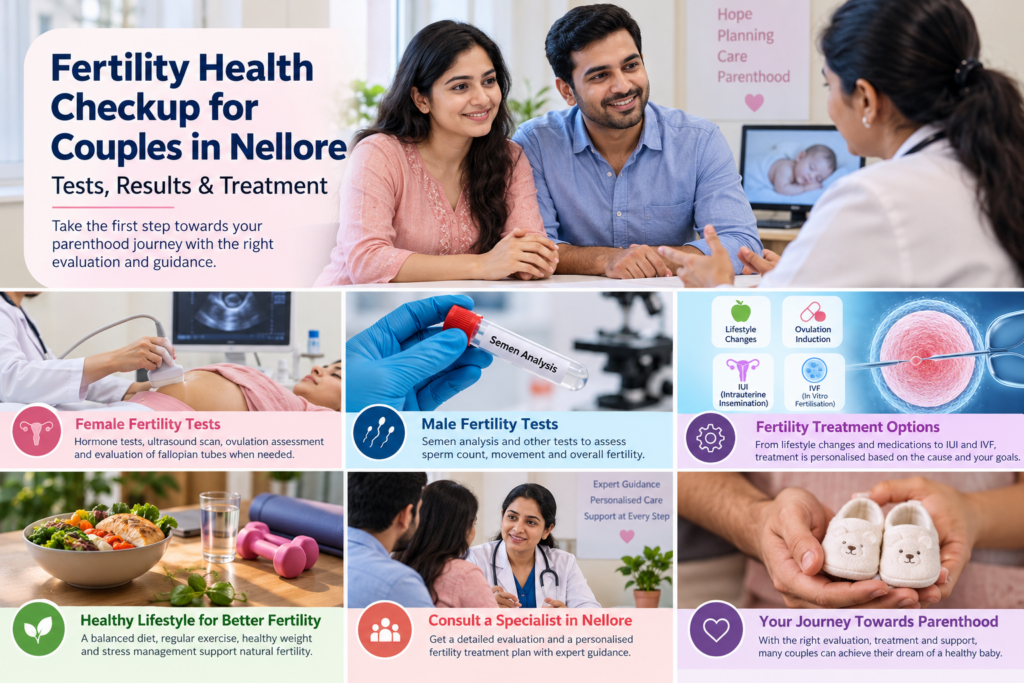
At Dr. Rohini’s Gynaecology, Infertility & Maternity Clinic in Nellore, fertility evaluation focuses on both partners. Depending on your medical history, this may include assessment of ovulation, hormone tests, pelvic ultrasound, fallopian tube evaluation and semen analysis.
The most important point: there is no single blood test that can confirm whether a couple will conceive naturally. Fertility depends on several factors, including age, ovulation, sperm health, fallopian tubes, the uterus and the couple’s reproductive history.
1. What Is a Fertility Health Checkup?
A fertility health checkup is a medical assessment designed to understand factors that may influence a person’s or couple’s ability to conceive.
It may be undertaken by couples who have been trying to become pregnant without success, people with known reproductive health conditions, or those seeking preconception counselling.
Depending on the situation, the evaluation may assess:
- Whether ovulation is occurring regularly.
- Whether the ovaries show features that may affect fertility.
- Whether the uterus has structural abnormalities that could affect pregnancy.
- Whether the fallopian tubes are open.
- Whether sperm count, movement and shape are within the laboratory’s reference ranges.
- Whether specific hormonal or medical conditions need attention.
A fertility checkup does not mean that advanced treatment is necessary. Some couples need only guidance about timing intercourse, while others may benefit from targeted medical treatment.
2. When Should Couples Get Fertility Tests?
The appropriate time to seek fertility evaluation depends mainly on the woman’s age, how long the couple has been trying, and whether either partner has a known fertility-related condition.
- Under 35 years: seek evaluation after 12 months of regular, unprotected intercourse without pregnancy.
- Age 35–40 years: seek evaluation after 6 months without pregnancy.
- Over 40 years: discuss evaluation promptly rather than waiting several months.
- At any age: seek earlier advice if periods are absent or irregular, there is known endometriosis or tubal disease, previous pelvic infection or surgery, a history of chemotherapy, or a known male fertility problem.
These are general recommendations. Individual circumstances may justify earlier assessment.
A fertility checkup before trying to conceive can be useful for reviewing medical conditions, medications, vaccinations and pregnancy preparation. However, extensive fertility investigations are not routinely necessary for every healthy person before attempting pregnancy.
3. Why Should Both Partners Be Evaluated?
Difficulty conceiving is not exclusively a woman’s health issue. Factors affecting either partner, both partners together, or no identifiable factor may contribute.
Evaluating both partners in parallel can prevent delays and unnecessary tests.
The initial consultation may cover:
- How long the couple has been trying.
- Previous pregnancies, miscarriages or fertility treatments.
- Menstrual cycle regularity and symptoms.
- Previous infections or reproductive surgery.
- Medical conditions and current medications.
- Sexual health concerns, including difficulties with erection or ejaculation.
- Relevant lifestyle factors and family history.
Fertility difficulties can be emotionally challenging. Testing should be approached without blame, and both partners should be encouraged to participate in decisions.
4. Female Fertility Tests
Not every woman needs every test. The doctor selects investigations according to menstrual history, age, symptoms, previous pregnancies and other findings.
A. Hormone blood tests
AMH (Anti-Müllerian Hormone)
AMH provides information about ovarian reserve, or the approximate number of eggs remaining in the ovaries. It can help predict how the ovaries may respond to fertility medicines.
However, AMH cannot reliably predict whether a woman will conceive naturally, determine egg quality by itself, or guarantee pregnancy after treatment. A low AMH result does not automatically mean pregnancy is impossible.
FSH and estradiol
These hormones may be measured together, commonly during the early part of the menstrual cycle, when an assessment of ovarian reserve is indicated. Their interpretation depends on cycle timing and the clinical context.
TSH (thyroid-stimulating hormone)
Thyroid assessment may be recommended when symptoms, menstrual irregularities, medical history or fertility evaluation suggest a thyroid problem. Thyroid disorders can affect menstrual function and pregnancy planning.
Prolactin
Prolactin testing is particularly relevant when periods are absent or irregular, or when symptoms suggest elevated prolactin. It is not required routinely for every person undergoing fertility evaluation.
Other hormone tests
Depending on symptoms, the doctor may recommend androgen testing or other targeted investigations, especially when PCOS or another hormonal disorder is suspected.
B. Pelvic ultrasound
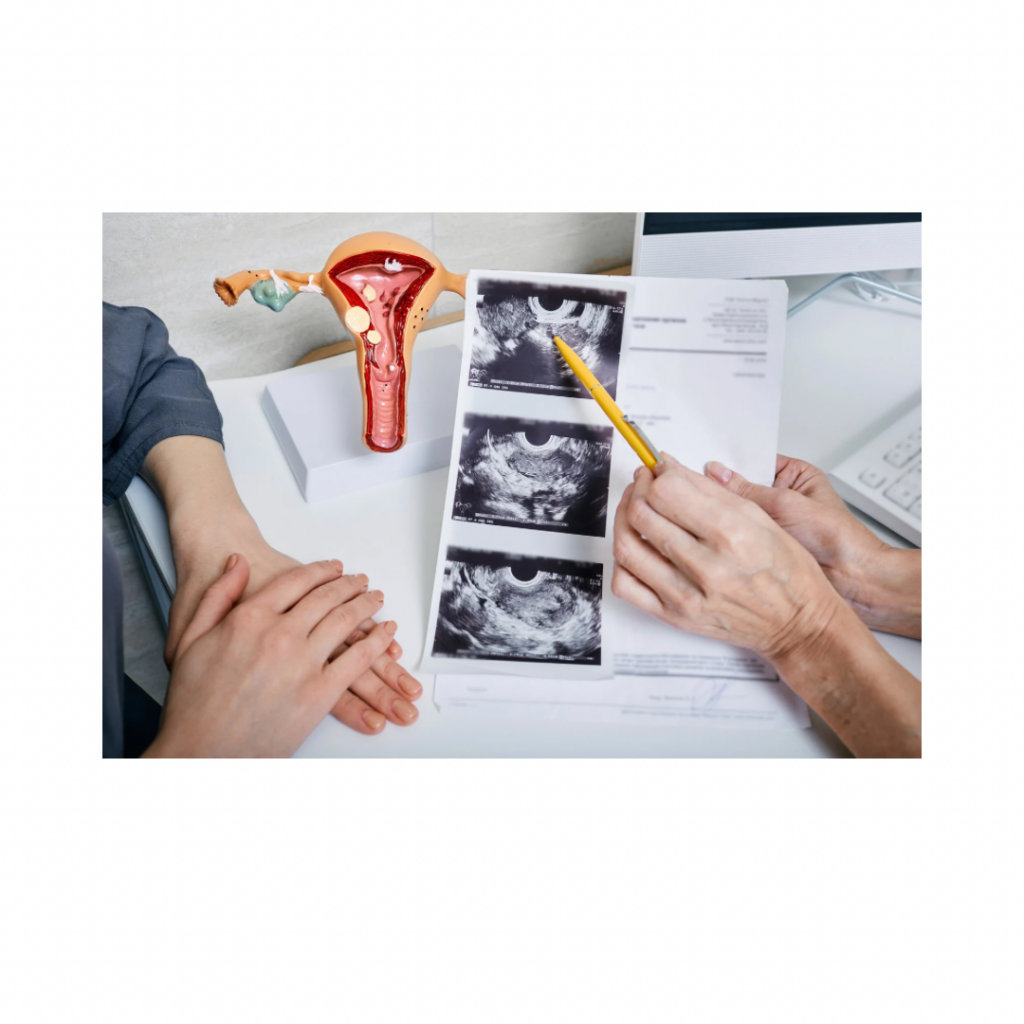
A pelvic ultrasound, sometimes performed transvaginally when appropriate and acceptable, helps assess the uterus and ovaries.
It may identify:
- Fibroids or certain uterine abnormalities.
- Ovarian cysts.
- Features associated with PCOS.
- Endometrial thickness and appearance.
- Antral follicles, which may help assess ovarian reserve.
An ultrasound cannot confirm every cause of infertility. A normal scan also does not guarantee that conception will occur.
C. Ovulation assessment
Ovulation is the release of an egg from an ovary.
For women with regular menstrual cycles of approximately 21–35 days, the cycle history may be sufficient to indicate regular ovulation in many cases. Additional confirmation is not always necessary.
If ovulation is uncertain, possible methods include:
- Urine ovulation predictor kits.
- A progesterone blood test timed appropriately before the expected next period.
- Ultrasound follicular monitoring in selected cases.
Progesterone testing must be timed correctly. It is not automatically required on day 21 for every woman because cycle length and ovulation timing vary.
D. Fallopian tube assessment
The fallopian tubes allow sperm and egg to meet and help the early embryo travel towards the uterus. Tubal blockage can reduce the chance of natural conception.
Tests may include:
Hysterosalpingography (HSG): an X-ray procedure using contrast to examine the uterine cavity and whether the fallopian tubes appear open.
Sonosalpingography or related ultrasound-based testing: a procedure that uses fluid or contrast during ultrasound to assess tubal patency, depending on the technique available.
The choice of test depends on the patient’s history, local availability and clinical assessment. These procedures can cause temporary cramping or discomfort, and the clinician should explain preparation, limitations and risks beforehand.
E. Tests for the uterus
If the history or initial imaging suggests a uterine cavity problem, further assessment may be recommended. Depending on the suspected condition, this can include specialised ultrasound, saline infusion sonography or hysteroscopy.
These investigations are targeted tests, not mandatory components of every fertility checkup.
5. Male Fertility Tests
Male fertility should be assessed alongside female fertility whenever applicable.
A. Semen analysis
Semen analysis is a key first-line investigation for male fertility. It commonly evaluates:
- Semen volume: the amount of semen produced.
- Sperm concentration: the number of sperm per unit of semen.
- Total sperm number: the total number of sperm in the sample.
- Motility: how sperm move.
- Morphology: the proportion of sperm with typical shape.
Laboratories use established reference criteria to interpret results. A result outside a reference range does not, on its own, prove that natural conception is impossible.
Semen results can vary between samples. If a result is abnormal, the doctor may recommend repeat testing and further evaluation based on the degree of abnormality and clinical history.
Follow the laboratory’s instructions for abstinence duration, sample collection, transport and timing. Inform the laboratory if the entire sample was not collected or if there were difficulties with collection.
B. Hormone tests for men
Blood tests such as FSH, LH and testosterone may be recommended when semen analysis, examination or symptoms suggest a hormonal problem.
They are not necessarily required for every man with a normal semen analysis.
C. Additional male investigations
A clinical examination by a doctor experienced in male reproductive health may be appropriate if semen results are abnormal or there are relevant symptoms.
A scrotal ultrasound may be recommended when examination or history suggests a specific problem. It is not routinely necessary for every man.
Do not start testosterone injections or anabolic steroids without medical advice when trying to conceive. External testosterone can suppress sperm production and may significantly reduce fertility.
6. How to Understand Fertility Test Results
Receiving an abnormal report can cause anxiety. The first step is to understand what the test measures and what it cannot tell you.
| Test | What it can help assess | What it cannot establish alone |
|---|---|---|
| AMH | Ovarian reserve and likely response to stimulation | Whether natural pregnancy is possible |
| FSH and estradiol | Aspects of ovarian function in context | A definite prediction of pregnancy |
| TSH | Thyroid function | The complete cause of infertility |
| Pelvic ultrasound | Uterine and ovarian structure | Whether every aspect of fertility is normal |
| HSG or tubal ultrasound | Whether tubes appear open | A guarantee of natural conception |
| Semen analysis | Several important sperm parameters | Whether pregnancy is impossible based on one result |
What does low AMH mean?
Low AMH may suggest reduced ovarian reserve. It should be interpreted alongside age, menstrual history, ultrasound findings and fertility goals.
It does not automatically mean that a woman cannot conceive naturally. Equally, a normal or high AMH result does not guarantee pregnancy.
What if the semen analysis is abnormal?
The doctor may recommend repeating the test, reviewing recent illness and medications, and arranging a male reproductive evaluation. Treatment depends on the particular findings and their likely cause.
What if all tests are normal?
Some couples experience unexplained infertility even after an appropriate evaluation. This does not mean that the symptoms or concerns are imaginary. The next steps depend on age, duration of trying, previous treatment and the couple’s preferences.
Important: Do not start fertility medicines or supplements based solely on an online interpretation of a report. The same test result may have different implications for different patients.
7. What Happens During a Fertility Consultation?
A fertility consultation usually begins with a detailed discussion rather than a long list of tests.
Your doctor may review:
- Menstrual cycles and symptoms.
- Duration of trying to conceive and timing of intercourse.
- Previous pregnancies, miscarriages and treatments.
- Medical history, medications and relevant surgery.
- Available ultrasound reports and blood tests.
- Your partner’s reproductive history and semen results, when available.
After reviewing the information, the doctor can recommend appropriate investigations and explain what each one is intended to answer.
What should you bring to the appointment?
- Previous fertility reports and ultrasound scans.
- Menstrual dates or a record of cycle length.
- Details of previous pregnancies and treatments.
- A list of medicines and supplements.
- Relevant medical and surgical records.
- Your partner’s semen analysis, if already performed.
- Questions about treatment choices, timing, cost and follow-up.
You do not need to complete every test before the first consultation.

8. Fertility Treatment Options
Treatment should follow the evaluation. There is no single treatment suitable for every couple.
A. Fertile-window guidance
For couples without a significant identified fertility problem, guidance about intercourse during the fertile window may be appropriate. The fertile window includes the days leading up to ovulation and the day of ovulation.
B. Treating an underlying condition
Depending on the findings, treatment may address ovulation disorders, thyroid disease, elevated prolactin or other relevant conditions. Treatment is specific to the diagnosis and should be medically supervised.
C. Ovulation induction
Medicines may be prescribed to help ovulation in selected patients, including some women with ovulatory disorders. Ultrasound or other monitoring may be needed to assess the response and reduce treatment risks.
These medicines should not be taken without a prescription and an appropriate plan.
D. Intrauterine insemination (IUI)
IUI involves placing prepared sperm into the uterus around the time of ovulation.
It may be considered for selected couples after evaluating factors such as ovulation, tubal patency, semen parameters, age and duration of infertility. IUI is not suitable for every couple, and pregnancy is not guaranteed.
E. Referral for advanced fertility treatment
Some couples may need specialist assessment for treatments such as in vitro fertilisation (IVF), particularly when the underlying diagnosis or previous treatment history makes simpler approaches less suitable.
The doctor can discuss whether referral to an appropriate fertility centre is indicated.
The best plan is the one that reflects the diagnosis, medical evidence, treatment availability, financial considerations and the couple’s informed preferences.
9. Lifestyle Measures That Support Fertility
Healthy habits can support general and reproductive health, although they cannot correct every medical cause of infertility.
- Aim for a balanced diet with adequate protein, vegetables, fruit and whole grains.
- Work towards a healthy weight where appropriate.
- Avoid smoking and recreational drugs; discuss alcohol use while planning pregnancy.
- Exercise regularly without excessive training.
- Review medicines and existing health conditions with your doctor.
- Women planning pregnancy should discuss folic acid supplementation, generally 400 micrograms daily for most average-risk individuals, starting before conception. Higher doses are indicated only in selected circumstances under medical guidance.
- Avoid unproven fertility supplements and herbal treatments advertised as guaranteed solutions.
Lifestyle changes should complement, not delay, fertility evaluation when medical assessment is indicated.
10. Common Fertility Testing Mistakes to Avoid
Mistake 1: Testing only the woman. Male factors are also important. Evaluating both partners can help avoid delays.
Mistake 2: Treating AMH as a fertility score. AMH is one part of the assessment, not a standalone prediction of natural conception.
Mistake 3: Ordering every hormone test. Tests should answer a relevant clinical question. Unnecessary testing can add expense and confusion.
Mistake 4: Repeating scans without a clear purpose. Your doctor should explain what each scan will assess and how the result could affect management.
Mistake 5: Starting fertility medicines without supervision. These medicines can have side effects and may require monitoring.
Mistake 6: Waiting too long despite warning signs. Irregular or absent periods, known tubal disease, severe pelvic pain or a known male fertility problem warrant earlier assessment.
Mistake 7: Assuming infertility is someone’s fault. Fertility difficulties are medical concerns, not a reason for blame or stigma.
11. Frequently Asked Questions
What tests are included in a fertility health checkup for couples?
Testing may include a reproductive history, pelvic ultrasound, selected hormone tests, ovulation assessment, tubal patency testing and semen analysis. Not every couple needs all these investigations. The doctor selects tests according to age, symptoms, previous history and how long pregnancy has been attempted.
Should both husband and wife undergo fertility testing?
Yes, when both partners are contributing to conception, evaluation should generally begin in parallel. Semen analysis is an important initial test for the male partner, while the female partner’s assessment may include ovulation, reproductive anatomy and other targeted investigations.
When should we get a fertility checkup?
Generally, seek evaluation after 12 months of trying if the woman is under 35, or after 6 months if she is 35 or older. If she is over 40, or either partner has a known fertility-related condition, earlier assessment is appropriate.
Does a low AMH level mean I cannot get pregnant?
No. Low AMH may indicate reduced ovarian reserve, but it does not by itself establish whether natural conception is possible. Age, ovulation, reproductive anatomy, sperm health and other factors also matter. Discuss the result with your doctor in the context of your fertility goals.
Is a semen analysis necessary if the man has no symptoms?
Often, yes, when a couple is undergoing an infertility evaluation. Male fertility problems may occur without obvious symptoms. Semen analysis provides useful information about sperm concentration, movement and morphology, although it cannot predict pregnancy with certainty.
Are fertility tests painful?
Most blood tests and routine ultrasound scans cause little or no discomfort. HSG and some other tubal tests can cause temporary cramping. Your doctor or testing centre should explain what to expect, preparation requirements and possible risks before the procedure.
How long does a fertility evaluation take?
Some initial investigations can be completed within days, while others depend on the menstrual cycle, repeat semen testing or further assessment. A complete evaluation may take one or more cycles. The timeline depends on the tests required and the findings.
Can women with PCOS get pregnant?
Many women with PCOS conceive, naturally or with treatment. PCOS can affect ovulation, so the appropriate approach depends on cycle patterns, other medical factors and the couple’s fertility evaluation. Not every woman with PCOS needs the same medicines or treatment.
Can we do a fertility checkup before trying for a baby?
Yes. A preconception consultation can review medical conditions, medications, reproductive history and pregnancy preparation. However, a healthy person planning pregnancy does not automatically need an extensive infertility workup. Testing should be guided by individual risk factors and concerns.
Does a normal fertility report guarantee pregnancy?
No. Fertility tests provide information about selected aspects of reproduction, but no routine panel can guarantee conception. If pregnancy does not occur within the recommended timeframe, follow-up can help determine whether further evaluation or treatment is appropriate.
12. When Should You Consult a Gynaecologist?
Arrange a fertility consultation if you have been trying to conceive for the recommended period, or sooner if you have irregular or absent periods, known endometriosis or tubal disease, previous ectopic pregnancy, significant pelvic pain, recurrent pregnancy loss or a known male fertility concern.
Seek urgent medical assessment if you may be pregnant and develop severe abdominal or pelvic pain, fainting, shoulder-tip pain or heavy bleeding, as these can be signs of a serious condition such as an ectopic pregnancy.
13. Key Takeaways
- Fertility evaluation should consider both partners.
- Age and duration of trying are important when deciding when to seek help.
- AMH, ultrasound and hormone tests each answer different questions.
- Semen analysis is a key part of male fertility evaluation.
- Not everyone needs every available test.
- Treatment depends on the cause and may range from timing guidance to ovulation induction, IUI or referral for advanced fertility treatment.
- An abnormal report does not automatically mean pregnancy is impossible, and a normal report does not guarantee conception.
Fertility Health Checkup for Couples in Nellore
If you are planning a pregnancy or experiencing difficulty conceiving, a personalised consultation can help you understand your options and decide which investigations are appropriate.
Dr. Rohini’s Gynaecology, Infertility & Maternity Clinic
Dr. U.V. Rohini, M.S. (Obstetrics & Gynaecology)
Shine Speciality Hospital, Mini Bypass Road, Nellore, Andhra Pradesh
Phone: 9490880960
The clinic provides fertility evaluation, ovulation assessment, counselling and IUI for suitable couples. Treatment recommendations are individualised according to medical findings and fertility goals.
Please bring previous reports if available. You do not need to complete every investigation before your first consultation.
Medical disclaimer: This article is for educational purposes and does not replace individual medical advice, diagnosis or treatment. Please consult a qualified clinician for personalised guidance.
Reviewed by Dr. Rohini, Experienced Gynecologist, Infertility & Maternity Specialist, Nellore.
Trusted Medical Resources on Fertility and Infertility
For additional evidence-based information about fertility testing, infertility evaluation and treatment, couples can refer to the following trusted medical organisations:
- World Health Organization (WHO): InfertilityThe WHO provides evidence-based information and guidance on infertility prevention, diagnosis and treatment.https://www.who.int/news-room/fact-sheets/detail/infertility
- American Society for Reproductive Medicine (ASRM): Fertility Evaluation of Infertile WomenThis clinical guidance explains the assessment of ovulation, ovarian reserve, fallopian tubes and other factors relevant to fertility evaluation.https://www.asrm.org/practice-guidance/practice-committee-documents/fertility-evaluation-of-infertile-women-a-committee-opinion-2021/
- American College of Obstetricians and Gynecologists (ACOG): Evaluating InfertilityThis patient resource explains when couples should seek fertility evaluation and which tests may be recommended.https://www.acog.org/womens-health/faqs/evaluating-infertility
- NHS: InfertilityThe NHS provides accessible information about infertility, possible causes, investigations and available treatments.https://www.nhs.uk/conditions/infertility/
These resources offer general medical information. The appropriate fertility tests and treatment plan depend on each couple’s age, medical history, symptoms and fertility goals. Consult a qualified healthcare professional for personalised advice.
