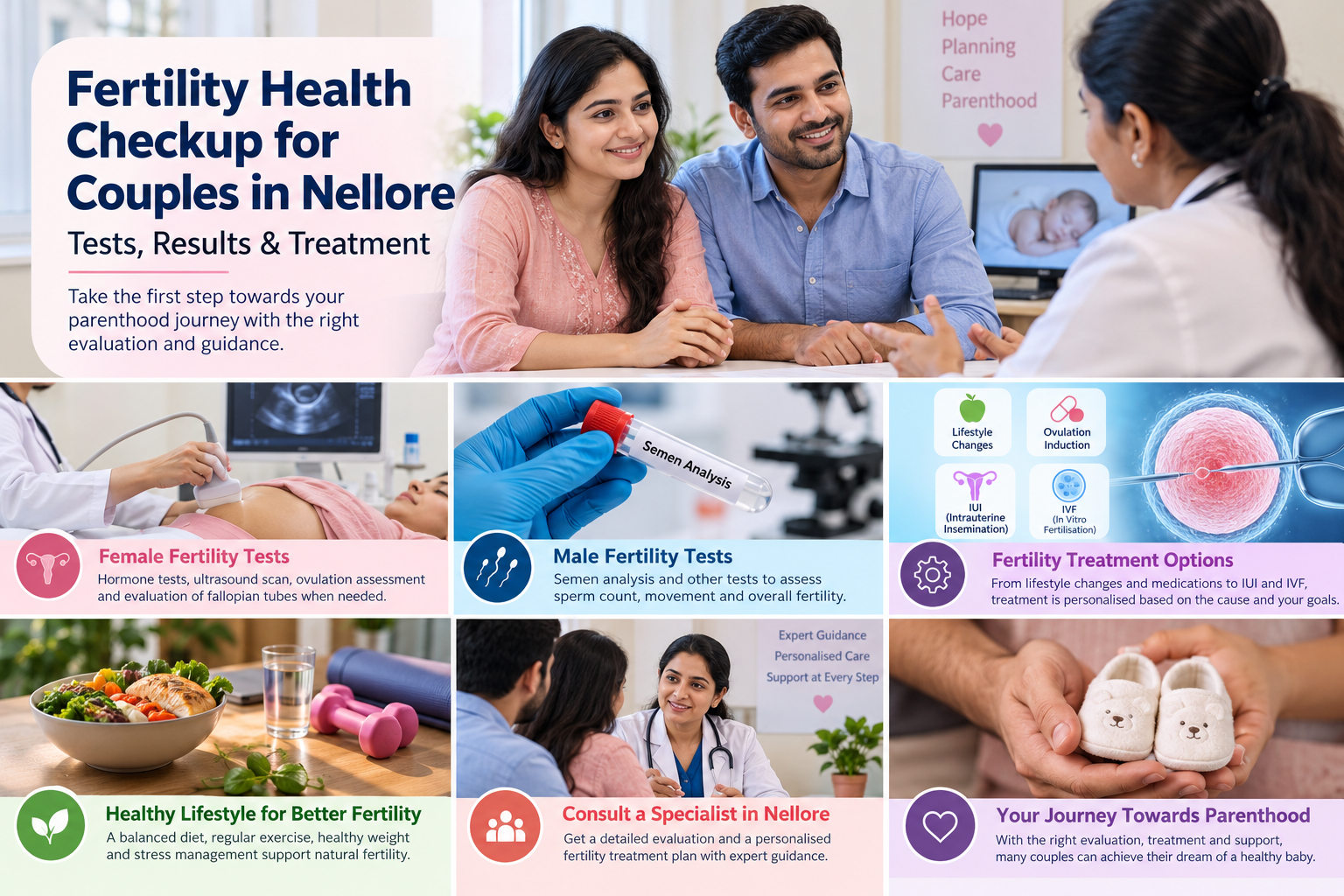
Why Am I Not Getting Pregnant Even After Trying? Top 10 Hidden Reasons Explained by a Fertility Doctor
Are you trying to conceive but still seeing a negative pregnancy test every month? You may be wondering whether you are timing intercourse correctly, whether your periods are normal, or whether something is affecting your fertility.
Not getting pregnant does not automatically mean that you cannot have a baby. However, when pregnancy takes longer than expected, understanding the possible causes can help you decide what to do next.
The most common reasons for difficulty getting pregnant include irregular ovulation, PCOS, increasing age, sperm-related problems, blocked fallopian tubes, endometriosis, uterine abnormalities, hormonal disorders and difficulties with timing intercourse. Sometimes, routine investigations do not reveal a definite cause. In such cases, doctors may diagnose unexplained infertility after an appropriate evaluation of both partners.
At Dr. Rohini’s Gynaecology, Infertility & Maternity Clinic in Nellore, fertility evaluation can help identify which investigations may be appropriate for your individual situation.

Table of Contents
Quick answer: When should you worry about not getting pregnant?
- Under 35 years: Consider a fertility evaluation after 12 months of regular, unprotected intercourse without pregnancy.
- Age 35–40 years: Seek evaluation after 6 months of trying.
- Over 40 years: Discuss fertility evaluation promptly rather than waiting several months.
- At any age: Seek earlier advice if you have irregular or absent periods, known PCOS, endometriosis, previous ectopic pregnancy, pelvic infection, previous fertility problems or a known sperm-related concern.
ASRM+1
These are general guidelines. Your medical history may make earlier assessment appropriate.
What does it mean when pregnancy is delayed?
Pregnancy requires several steps to happen successfully. An egg must mature and be released from an ovary, sperm must reach and fertilise the egg, and the resulting embryo must travel to the uterus and implant.
A problem at any stage can reduce the chance of conception.
Infertility is generally defined as not achieving pregnancy after 12 months of regular, unprotected sexual intercourse. Medical evaluation may be recommended earlier depending on age, symptoms and medical history. Fertility difficulties can involve the woman, the man, both partners or causes that remain unexplained after appropriate tests.
It is also important to remember that conception does not necessarily occur during the first few months of trying, even when there is no identified fertility problem.
Top 10 reasons you may not be getting pregnant
These are possible explanations, not a diagnosis. More than one factor can contribute to difficulty conceiving.
1. Ovulation problems: The egg may not be released regularly
Ovulation is the release of an egg from an ovary. If ovulation does not happen regularly, the opportunities for fertilisation may be reduced.
Possible clues include:
- Irregular menstrual cycles.
- Periods that are very far apart.
- Missing periods for several months.
- Difficulty predicting the fertile days.
Some women ovulate without noticing any obvious symptoms, so the absence of ovulation pain or changes in vaginal discharge does not prove that ovulation is absent.
What may help? A gynaecologist may review your menstrual history and recommend targeted investigations or ultrasound monitoring if indicated.
2. PCOS: Irregular hormones can affect egg release
Polycystic ovary syndrome (PCOS) is a hormonal condition that can interfere with ovulation.
Possible symptoms include irregular periods, acne, excess facial or body hair and difficulty managing weight. However, not every woman with PCOS experiences all these symptoms.
PCOS can make conception less predictable because ovulation may occur infrequently or not at all. Many women with PCOS can conceive, sometimes naturally and sometimes with treatment to support ovulation.
What may help? Assessment may include menstrual history, examination, selected hormone tests and ultrasound when appropriate. Treatment depends on the individual’s health and pregnancy goals. Do not start ovulation-inducing medication without medical supervision.
3. Age-related changes in fertility
Age is an important factor in fertility because both the number of available eggs and the likelihood that an egg will produce a healthy embryo change over time.
Fertility generally declines with age, with a more significant decline during the later reproductive years. This means that a couple who conceived easily several years ago may experience difficulty with a later pregnancy.
Age does not determine an individual’s fertility with certainty, but it affects how quickly evaluation should begin.
What may help? If you are 35 or older and have been trying for six months without success, arrange an assessment. If you are over 40, discuss evaluation as soon as possible.
4. Male factor infertility: Sperm health matters too
Difficulty conceiving is not exclusively a women’s health problem. Fertility depends on both partners.
Male fertility problems may involve:
- Low sperm count or absence of sperm.
- Reduced sperm movement.
- Abnormal sperm shape.
- Problems with ejaculation or sperm transport.
- Certain hormonal or testicular conditions.
A man may have a sperm-related fertility problem even if he feels healthy and has no obvious symptoms.
What may help? Semen analysis is usually an important early investigation. Depending on the findings, the doctor may recommend repeat testing or assessment by a specialist.
It is important to evaluate both partners rather than assuming that the woman is the cause.
5. Blocked or damaged fallopian tubes
The fallopian tubes connect the ovaries to the uterus. Fertilisation usually occurs within a fallopian tube before the embryo travels towards the uterus.
If the tubes are blocked or damaged, the egg and sperm may not meet successfully.
Possible risk factors include previous pelvic inflammatory disease, certain sexually transmitted infections, previous ectopic pregnancy and some pelvic or abdominal surgeries.
Blocked tubes may cause no noticeable symptoms. A woman can have regular periods and still have a tubal problem.
What may help? A doctor may recommend a hysterosalpingogram (HSG), an imaging test used to assess whether the fallopian tubes appear open. Other investigations may be appropriate in selected cases.
A suspected tubal problem deserves timely medical assessment because it can also affect the risk of ectopic pregnancy.
6. Endometriosis: Painful periods may be a clue
Endometriosis is a condition in which tissue similar to the lining of the uterus grows outside the uterus. It can be associated with inflammation, pelvic pain, adhesions and fertility difficulties.
Possible symptoms include:
- Severe period pain.
- Pain during sexual intercourse.
- Persistent pelvic pain.
- Painful bowel movements during menstruation in some cases.
Some women with endometriosis have few symptoms. Others have significant pain. The severity of pain alone does not reliably indicate the extent of the condition or its effect on fertility.
What may help? A gynaecologist may review symptoms and perform an examination or ultrasound. Further investigations depend on the findings. Not every woman requires surgery, and the best treatment depends on pain, age and pregnancy plans.
7. Uterine fibroids, polyps or other abnormalities
The uterus needs to provide a suitable environment for an embryo to implant and develop.
Certain uterine abnormalities, including fibroids that distort the uterine cavity and some endometrial polyps, may affect fertility or pregnancy outcomes. Other fibroids may have little or no effect on conception.
The location, size and number of fibroids matter. Their presence does not automatically mean that surgery is necessary.
What may help? Pelvic ultrasound is often used to assess the uterus. Depending on the suspected abnormality, your doctor may recommend additional imaging or a procedure to examine the uterine cavity.
Treatment should be individualised, especially if you are planning pregnancy, because some procedures can affect future fertility or carry their own risks.
8. Thyroid or other hormonal disorders
Hormones help regulate the menstrual cycle and ovulation. Certain endocrine conditions can interfere with fertility.
Examples include:
- Thyroid disorders.
- Elevated prolactin levels in appropriate clinical circumstances.
- Other disorders affecting the hormones that control ovulation.
Possible clues may include irregular periods, absent periods or other symptoms associated with a hormonal condition. However, symptoms alone cannot confirm the diagnosis.
What may help? Depending on your history, your doctor may recommend thyroid testing or other targeted hormone investigations. Prolactin testing is particularly useful when there are relevant symptoms or clinical indications; it is not necessary for every patient undergoing a routine fertility evaluation.
9. Incorrect timing of intercourse
Even when both partners have no identified fertility problem, pregnancy may not occur if intercourse does not coincide with the fertile window.
The fertile window is approximately the six-day period ending on the day of ovulation. The chances of conception are generally highest when intercourse occurs in the days leading up to ovulation, particularly the two days before it.
If you are trying to conceive:
- Have intercourse every two to three days throughout the menstrual cycle, or regularly during the fertile window.
- If you track ovulation, remember that calendar apps estimate dates and cannot confirm exactly when ovulation occurs.
- Ovulation predictor kits may help identify the approaching fertile period, but results can be harder to interpret in some hormonal conditions, including PCOS.
Do not let tracking become a source of pressure. If timing intercourse is difficult, discuss a practical approach with your doctor.
10. Unexplained infertility or a combination of factors
Sometimes, fertility investigations do not identify a definite explanation for delayed conception.
This is known as unexplained infertility. It does not mean that the symptoms are imaginary or that no biological factors exist. Rather, the standard evaluation has not identified a clear cause.
Other couples may have more than one contributing factor, such as mildly reduced sperm parameters combined with irregular ovulation or age-related changes.
What may help? Your doctor can review the results, explain the options and discuss whether continued attempts at natural conception, ovulation treatment, IUI or referral for advanced fertility treatment is appropriate.
The next step should depend on the complete fertility assessment, not on a single test result.

Symptoms that deserve attention
Difficulty conceiving can occur even when both partners feel completely healthy. Nevertheless, certain symptoms may suggest an underlying condition that warrants evaluation.
| Symptom or history | Why it matters |
|---|---|
| Irregular or absent periods | May indicate irregular ovulation or a hormonal condition |
| Severe period pain | Can be associated with endometriosis or another pelvic condition |
| Persistent pelvic pain | May require assessment for a gynaecological problem |
| Previous pelvic infection or ectopic pregnancy | May indicate a risk of tubal damage |
| Known abnormal semen analysis | May require further male fertility evaluation |
| Repeated pregnancy losses | Deserves an individualised assessment |
Seek urgent medical care if you might be pregnant and develop severe or one-sided abdominal pain, shoulder-tip pain, fainting or heavy bleeding, particularly with dizziness. These symptoms can indicate an ectopic pregnancy or another emergency.
Do not wait for a routine fertility appointment if you have these warning signs.
How do doctors diagnose infertility?
A fertility assessment aims to identify the most likely causes while avoiding unnecessary investigations.
1. Medical and menstrual history
Your doctor may ask about:
- How long you have been trying to conceive.
- Your age and menstrual cycle pattern.
- Previous pregnancies, miscarriages or ectopic pregnancy.
- Pelvic pain or painful intercourse.
- Previous infections or surgeries.
- Medical conditions and medications.
- Previous fertility investigations and treatments.
2. Evaluation of both partners
Both partners should be included in the assessment wherever applicable. The woman’s investigations alone may not identify a male factor, and a semen analysis alone cannot assess ovulation or the fallopian tubes.
3. Individualised examination and investigations
The doctor will decide which tests are useful based on the history, examination and initial results. Not everyone needs every available test.
The purpose is to understand the most relevant factors and develop a treatment plan suited to the couple.
Which fertility tests may be recommended?
The following are examples of investigations. They are not a checklist that every patient must complete.
| Test | Why it may be recommended |
|---|---|
| Pelvic ultrasound | To assess the uterus, ovaries and certain pelvic abnormalities |
| Semen analysis | To assess sperm count and other important semen parameters |
| Thyroid function test | When thyroid disease is suspected or testing is otherwise indicated |
| Other hormone tests | To investigate specific symptoms or suspected ovulation disorders |
| Ovulation assessment | When the cycle history suggests that ovulation may be irregular |
| HSG or another tubal assessment | To evaluate whether the fallopian tubes are open |
| Ovarian reserve tests, such as AMH | As an adjunct to fertility assessment and treatment planning in appropriate patients |
Do you need every hormone test?
No. The correct tests depend on your symptoms, menstrual cycle, age and medical history.
For example, women with regular menstrual cycles of 21–35 days generally do not require additional testing solely to confirm ovulation unless other findings, such as signs of androgen excess, warrant it. Ovarian reserve tests can help guide treatment planning but cannot reliably predict whether a woman without established infertility will conceive naturally.
Routine diagnostic laparoscopy, endometrial biopsy and broad hormone panels are not required for every couple. Additional investigations should have a clear clinical reason.
What are the treatment options if you are not getting pregnant?
Treatment is chosen according to the cause, the age of both partners, how long you have been trying, the results of investigations and your pregnancy goals.
Lifestyle and preconception care
Your doctor may discuss nutrition, physical activity, smoking cessation, alcohol avoidance, management of existing health conditions and medicines that may affect conception.
Treatment for ovulation problems
Women who do not ovulate regularly may benefit from treatment directed at the underlying condition. Ovulation-inducing medicines require appropriate medical assessment and monitoring because they can have side effects and may increase the risk of multiple pregnancy.
Treatment for thyroid or other hormonal conditions
When a relevant hormonal disorder is identified, treating it may improve reproductive health. The treatment depends on the specific diagnosis.
Treatment for tubal or uterine problems
Some structural problems require observation, additional imaging or a procedure. Others may not need treatment. Decisions about surgery must consider whether it is likely to improve fertility and what risks it carries.
IUI (intrauterine insemination)
IUI involves placing prepared sperm into the uterus around the time of ovulation. It may be suitable for selected couples after assessment of factors such as the fallopian tubes, ovulation and semen results.
IVF or specialist referral
In vitro fertilisation (IVF) may be considered for certain causes of infertility or when other approaches are unlikely to be effective. It is not automatically the first treatment for every couple.
At Dr. Rohini’s Gynaecology, Infertility & Maternity Clinic in Nellore, fertility evaluation and IUI care can be discussed according to the individual findings. If a more advanced treatment is indicated, referral to an appropriate fertility centre may be discussed.
No treatment can guarantee pregnancy. Your doctor should explain the expected benefits, limitations, risks and costs before you decide.
Lifestyle measures that may support fertility
Healthy habits can support reproductive health, although they cannot correct every cause of infertility.
- Eat a balanced diet: Include vegetables, fruits, whole grains, protein sources and other nutrient-rich foods.
- Discuss folic acid: If you are planning pregnancy, ask your doctor about the recommended folic acid supplement and dose.
- Avoid smoking: Smoking can negatively affect reproductive health in both partners.
- Maintain a sustainable activity routine: Regular physical activity supports general health.
- Review medications: Tell your doctor about prescription medicines, over-the-counter products, herbal remedies and supplements.
- Manage chronic conditions: Conditions such as diabetes and thyroid disorders may need attention before pregnancy.
- Avoid unproven fertility remedies: No special food, herbal drink or supplement is guaranteed to improve conception.
Healthy habits are helpful, but do not postpone a recommended fertility evaluation in the hope that lifestyle changes alone will resolve the problem.
Common mistakes couples should avoid
- Waiting too long despite warning signs. Irregular periods, known endometriosis or other fertility-related conditions may justify earlier assessment.
- Blaming only the woman. Male factors can contribute independently or alongside female factors.
- Buying multiple tests without guidance. Testing should answer specific clinical questions.
- Starting fertility medicines without supervision. Incorrect use can create avoidable risks.
- Assuming a normal ultrasound means everything is normal. An ultrasound cannot assess every aspect of fertility, including sperm quality and tubal patency.
- Assuming stress is the only reason. Emotional stress deserves support, but difficulty conceiving should not automatically be attributed to stress.
- Believing that IVF is always necessary. Treatment depends on the cause and may range from guidance to specialist fertility treatment.
Myths about difficulty getting pregnant
Myth: If periods are regular, fertility must be normal.
Fact: Regular periods can be reassuring about ovulation, but they do not confirm normal sperm parameters, open fallopian tubes or every aspect of reproductive health.
Myth: Infertility is always caused by the woman.
Fact: Fertility difficulties may involve either partner, both partners or unexplained causes. Evaluation should include both partners.
Myth: PCOS means a woman cannot become pregnant.
Fact: PCOS can affect ovulation, but many women with PCOS conceive naturally or with appropriate treatment.
Myth: A high AMH level guarantees pregnancy.
Fact: AMH is mainly used as one component of ovarian reserve assessment and treatment planning. It is not a guarantee of natural conception or a complete measure of egg quality.
Myth: Stress alone causes infertility.
Fact: Stress can affect wellbeing and sexual health, but it should not be assumed to be the sole cause of delayed pregnancy. Appropriate medical assessment remains important.
What women should know before their consultation
A little preparation can make your appointment more useful.
Bring or note:
- The first day of your last menstrual period and usual cycle length.
- How many months you have been trying to conceive.
- Previous pregnancy and miscarriage history, if any.
- Past ultrasound reports, blood tests and semen analysis results.
- Previous fertility medicines or treatments.
- A list of current medicines and supplements.
- Any history of pelvic infection, ectopic pregnancy, surgery or severe period pain.
Questions you may wish to ask your doctor include:
- What are the most likely reasons for delayed conception in our situation?
- Should both partners be tested now?
- Which investigations are necessary first?
- Do I need an assessment of my fallopian tubes?
- Are there any reasons not to continue trying naturally?
- Which treatments are suitable for us, and what are their limitations?

Clinical insight: Why similar symptoms can lead to different treatment plans
Two women may both have irregular periods, but the underlying causes may differ. One may have PCOS, while another may have a thyroid disorder or a different ovulation problem.
Similarly, a woman with fibroids may not need surgery if the fibroids do not affect the uterine cavity, while another woman with a cavity-distorting fibroid may need further assessment.
This is why a fertility plan should follow an individual evaluation rather than a standard package of tests or treatment.
1.Why am I not getting pregnant?
If you’ve been trying for 6–12 months and not conceiving, there may be reasons like irregular ovulation, hormonal imbalance, PCOS, thyroid issues, or sperm-related factors.
The good news is — most infertility cases are treatable with simple evaluation and basic treatment.
👉 At Dr. Rohini’s Gynecology, Infertility & Maternity Clinic, Nellore, we focus on identifying the exact cause and offering the right treatment without unnecessary delay.
2.Can PCOS patients get pregnant?
Yes — PCOS is one of the most common and treatable causes of infertility.
With proper treatment and ovulation support, many women conceive successfully.Most infertility cases are treatable with simple evaluation. If you are looking for infertility treatment in Nellore, early consultation can improve success rates.
3.Do irregular periods affect pregnancy?
Yes. Irregular periods usually indicate ovulation problems.
👉 Treating the underlying cause helps restore fertility.
Most infertility cases are treatable with simple evaluation. If you are looking for infertility treatment in Nellore, early consultation can improve success rates.
4.Can lifestyle changes improve fertility?
Yes.
Healthy diet
Weight control
Regular exercise
Avoid smoking/alcohol
👉 These significantly improve fertility outcomes.
5.Is infertility permanent?
No — in many cases, infertility is completely treatable.
Most infertility cases are treatable with simple evaluation. If you are looking for infertility treatment in Nellore, early consultation can improve success rates.👉 The key is early diagnosis and correct treatment.
When should you consult a gynaecologist?
Arrange a fertility consultation if:
- You have tried for 12 months and are under 35.
- You have tried for six months and are 35 or older.
- You are over 40 and planning pregnancy.
- Your periods are irregular or absent.
- You have severe period pain, known endometriosis or a history of pelvic infection.
- Either partner has a known reproductive health concern.
Do not wait for these time thresholds if a medical condition suggests that earlier evaluation is appropriate.
For severe abdominal pain, fainting or heavy bleeding when pregnancy is possible, seek urgent medical care rather than waiting for a routine appointment.
Key takeaways
- Delayed pregnancy can have several causes, and sometimes no definite cause is found.
- Ovulation, sperm health, age, fallopian tube function and uterine health all matter.
- Regular periods do not rule out every fertility problem.
- Both partners should be evaluated when appropriate.
- Not everyone needs the same tests, IUI or IVF.
- Seek fertility advice according to your age, symptoms and duration of trying.
Conclusion: Take the next step towards understanding your fertility
Not getting pregnant can be emotionally difficult, especially when every month brings uncertainty. But a delay does not automatically mean that pregnancy is impossible.
The most useful next step is to understand the possible causes and determine whether an evaluation is appropriate for you and your partner. Early assessment can help identify treatable conditions and clarify your options without relying on guesswork or unnecessary tests.
If you are trying to conceive and need personalised guidance,
Dr. Rohini’s Gynaecology, Infertility & Maternity Clinic
Doctor: Dr. U.V. Rohini, MS (OBG)
Location: Nellore, Andhra Pradesh, India
Associated Hospital: Shine Speciality Hospital, Mini Bypass Road, Nellore
Phone: 9490880960 / 9346423765
For appointments and enquiries regarding pregnancy care, infertility evaluation, IUI, PCOS treatment and gynaecological care, please contact the clinic.
Trusted Medical Resources on Infertility
For reliable information about fertility, infertility evaluation and treatment options, consult these authoritative medical organisations:
1. World Health Organization (WHO)
The World Health Organization explains the causes of infertility, its impact on individuals and couples, and the importance of appropriate medical care.
Read more: WHO – Infertility
2. American Society for Reproductive Medicine (ASRM)
ASRM provides professional guidance on fertility evaluation, including the assessment of ovulation, fallopian tubes, ovarian reserve and male fertility.
Read more: ASRM – Fertility Evaluation of Infertile Women
3. American College of Obstetricians and Gynecologists (ACOG)
ACOG provides patient-friendly information about infertility, when to seek medical evaluation and what investigations may be recommended.
Read more: ACOG – Evaluating Infertility
4. American Society for Reproductive Medicine (ASRM) – Natural Fertility
Learn about the fertile window, ovulation and the timing of intercourse when trying to conceive.
Read more: ASRM – Optimizing Natural Fertility
Medical disclaimer: These resources provide general educational information. They do not replace an individual consultation with a qualified healthcare professional.