
PCOS Treatment in Nellore | PCOD Care & Fertility Support – Dr. Rohini
Looking for PCOS treatment in Nellore? Dr. Rohini offers expert care for PCOD, irregular periods, weight issues & fertility problems with personalized treatment. Book your consultation today!
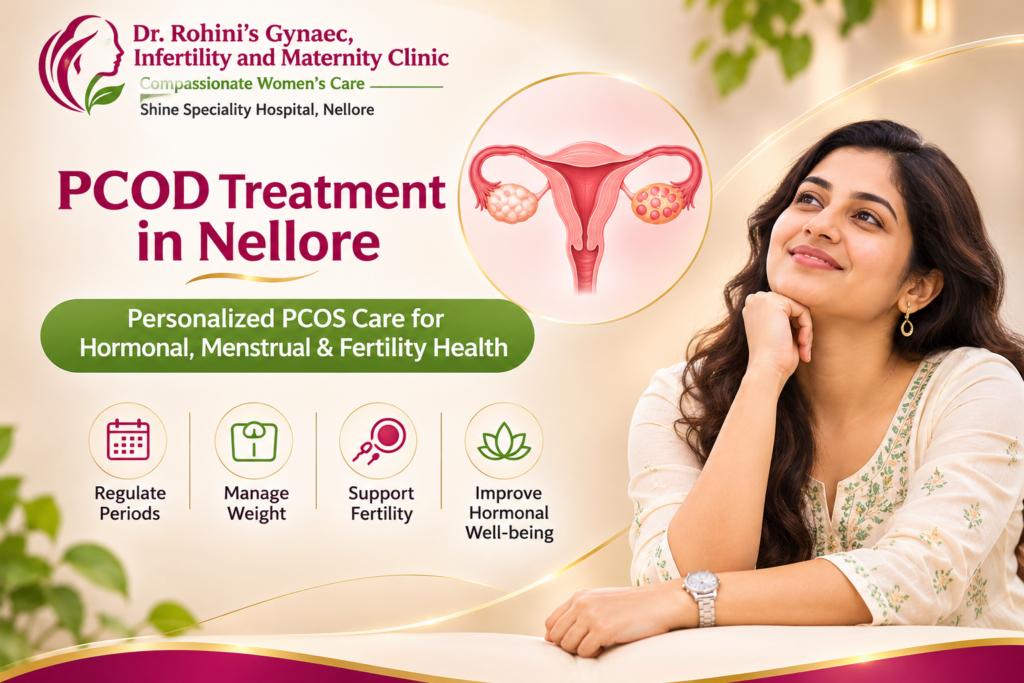
Personalized PCOS care for menstrual health, hormonal symptoms, metabolic health and fertility
Are you experiencing irregular periods, acne, unwanted facial hair, weight-related concerns or difficulty getting pregnant? These symptoms may be associated with Polycystic Ovary Syndrome (PCOS), commonly known as PCOD.
PCOS is a common hormonal and metabolic condition that can affect menstrual cycles, ovulation, skin health and fertility. Some women also experience insulin resistance and an increased risk of developing metabolic health problems.
At Dr. Rohini’s Gynaec, Infertility and Maternity Clinic, Nellore, Dr. U.V. Rohini (MS OBG), an experienced Gynecologist and Obstetrician with 15 years of clinical experience, provides individualized evaluation and management for women with PCOD/PCOS.
Treatment is planned according to your symptoms, age, medical history, metabolic health and pregnancy plans. The aim is to support better menstrual health, manage symptoms and address long-term health concerns.
Table of Contents
What is PCOD or PCOS?
Polycystic Ovary Syndrome (PCOS), also commonly called PCOD, is a hormonal condition that affects ovarian function and can influence the body’s metabolism.
Women with PCOS may have:
- Irregular or infrequent ovulation.
- Higher levels or effects of androgen hormones.
- Polycystic ovarian appearance on ultrasound in some cases.
- Insulin resistance or metabolic risk factors.
Despite its name, PCOS does not mean that every woman has actual ovarian cysts. The small structures seen on an ultrasound are generally developing follicles.
PCOS can occur in women with different body types. Being overweight is not necessary to have PCOS.
Common symptoms of PCOD
PCOS symptoms differ from woman to woman. Some women experience several symptoms, while others may have only one or two.
Common symptoms include:
1. Irregular menstrual periods
- Delayed periods.
- Missed periods.
- Infrequent menstrual cycles.
- Unpredictable bleeding.
2. Acne and oily skin
Higher androgen activity can contribute to persistent acne, particularly around the chin, jawline and face.
3. Excess facial or body hair
Some women develop unwanted hair growth on the chin, upper lip, chest or abdomen.
4. Hair thinning
Thinning of scalp hair, particularly around the crown or front of the scalp, can occur.
5. Weight-related concerns
Some women experience weight gain or difficulty managing weight. However, PCOS also occurs in women with a healthy body weight.
6. Difficulty getting pregnant
Irregular ovulation may make it difficult to predict fertile days and conceive naturally.
7. Other associated concerns
Some women may experience fatigue, sleep problems, anxiety, low mood or concerns about body image.
If your periods are repeatedly irregular or absent, consult a gynecologist rather than relying only on home remedies.
What causes PCOD?
There is no single cause of PCOS. It is a complex condition involving hormonal, genetic and metabolic factors.
Important contributing factors include:
1. Genetic predisposition: PCOS may run in families, suggesting an inherited tendency.
2. Insulin resistance: Some women have reduced sensitivity to insulin. The body may produce more insulin, which can contribute to increased androgen production and metabolic problems.
3. Hormonal imbalance: Increased androgen activity can interfere with normal ovulation and contribute to acne and unwanted hair growth.
4. Ovulatory dysfunction: Irregular or absent ovulation can result in delayed or missed periods.
5. Lifestyle and metabolic factors: Physical inactivity, sleep disturbances and weight changes can influence metabolic health and PCOS symptoms. They are not the sole cause of PCOS.
How is PCOD diagnosed?
There is no single blood test or ultrasound that confirms PCOS in every woman.
A proper evaluation is an important first step in PCOD treatment in Nellore. Diagnosis may involve menstrual history, clinical assessment and appropriate blood tests.
1. Medical history
Your gynecologist may discuss:
- Menstrual cycle patterns.
- Age at the first period.
- Weight changes.
- Acne and unwanted hair growth.
- Previous pregnancy history.
- Family history of PCOS or diabetes.
- Current medications and lifestyle.
2. Clinical examination
Depending on your symptoms, examination may include assessment of weight, blood pressure, skin changes and signs of excess androgen activity.
3. Blood investigations
Depending on your clinical presentation, tests may include:
- Thyroid function tests.
- Prolactin.
- Androgen hormone assessment.
- Blood glucose or HbA1c.
- Lipid profile.
- Other hormonal investigations when indicated.
4. Pelvic ultrasound
An ultrasound may help assess ovarian appearance and the reproductive organs when clinically required.
Important: In adults who have both irregular menstrual cycles and clinical or biochemical hyperandrogenism, ultrasound or AMH testing is not always required to establish the diagnosis. Adolescents require different diagnostic criteria, and ovarian ultrasound and AMH should not be used to diagnose PCOS in adolescents.
Not every patient requires every investigation.
PCOD Treatment in Nellore – Available Treatment Options
The approach to PCOD treatment in Nellore depends on whether the main concern is irregular periods, hormonal symptoms, metabolic health or difficulty becoming pregnant.
There is no single treatment suitable for everyone.
1. Lifestyle management
Lifestyle management is an important part of PCOS care, irrespective of body weight.
Recommendations may include:
- A balanced, sustainable eating pattern.
- Regular physical activity.
- Strength training and aerobic exercise as appropriate.
- Adequate sleep.
- Stress management.
- Weight management when clinically appropriate.
There is no single PCOS diet that works for every woman. The focus should be on sustainable habits rather than extreme dieting or unnecessary food restrictions.

2. Medical treatment for irregular periods
When periods are irregular or infrequent, treatment may be recommended to regulate bleeding and protect the uterine lining.
Depending on individual circumstances, options may include:
- Combined hormonal contraceptive pills.
- Cyclic progestogen therapy.
- Other appropriate hormonal treatments.
The choice depends on medical history, contraindications and the patient’s preferences.
3. Treatment for acne and unwanted hair growth
Treatment may involve hormonal medication, dermatological care or other symptom-specific options.
Some women may benefit from cosmetic hair-reduction procedures. Medication to reduce androgen-related symptoms requires medical supervision and appropriate contraceptive counselling.
4. Metabolic health management
Women with PCOS may require assessment of blood glucose, diabetes risk, cholesterol and blood pressure.
Metformin may be considered in selected women, particularly for metabolic indications, after assessing individual suitability.
It is not necessary for every woman with PCOS.
5. Fertility treatment for women planning pregnancy
PCOS can interfere with ovulation, but many women with PCOS can become pregnant.
Treatment may include:
- Assessment of ovulation.
- Evaluation of other fertility factors when indicated.
- Ovulation induction medication.
- Ultrasound follicular monitoring.
- IUI in appropriately selected cases.
The choice of fertility treatment depends on the couple’s evaluation and individual circumstances. Ovulation induction with letrozole is recommended as first-line pharmacological treatment for anovulatory infertility due to PCOS when there are no other infertility factors.

6. Long-term follow-up
PCOS is a long-term condition. Follow-up may include monitoring:
- Menstrual regularity.
- Blood glucose and metabolic health.
- Blood pressure and cholesterol when indicated.
- Changes in symptoms.
- Fertility goals.
- Emotional well-being.
Can PCOD be managed without medication?
Some women can manage many PCOS-related concerns with lifestyle measures and regular follow-up, while others require medication.
Treatment depends on the symptoms and health risks involved.
Lifestyle changes can improve metabolic health and may support menstrual regularity and ovulation. However, they are not a guaranteed substitute for medical treatment.
Do not stop prescribed medication without discussing it with your gynecologist.
Can women with PCOD get pregnant?
Yes. Many women with PCOS conceive naturally or with appropriate fertility treatment.
PCOS may affect fertility because ovulation can be irregular or absent. However, it does not mean that pregnancy is impossible.
If you are planning pregnancy, a gynecologist can assess:
- Whether ovulation is occurring.
- Whether there are other hormonal concerns.
- Whether the fallopian tubes need assessment.
- Whether your partner requires semen analysis.
- Which fertility treatment is appropriate.
For selected women, ovulation induction and follicular monitoring may be sufficient. IUI may be considered when clinically appropriate.
Does PCOD cause diabetes?
PCOS is associated with an increased risk of impaired glucose tolerance and type 2 diabetes, even in some women who are not overweight.
This does not mean every woman with PCOS will develop diabetes.
A gynecologist may recommend appropriate glucose testing and periodic metabolic assessment according to individual risk factors.

My approach to PCOD treatment
At Dr. Rohini’s Gynaec, Infertility and Maternity Clinic, the focus is on understanding each woman’s concerns rather than treating every patient with the same medication.
With 15 years of experience in Obstetrics and Gynaecology, Dr. U.V. Rohini emphasizes:
- Listening carefully to menstrual, hormonal and fertility concerns.
- Assessing symptoms and relevant medical history.
- Recommending investigations only when clinically appropriate.
- Explaining the diagnosis and treatment choices.
- Considering pregnancy plans before selecting medication.
- Supporting long-term menstrual and metabolic health.
- Reviewing treatment response through follow-up.
The treatment plan is developed through discussion between the doctor and patient.
When should you consult a gynecologist for PCOD?
Consider a consultation if you experience:
- Repeatedly irregular menstrual cycles.
- Periods that stop for several months.
- Persistent acne or increasing facial hair.
- Unexplained or concerning hair thinning.
- Difficulty conceiving.
- Weight-related or metabolic health concerns.
- Symptoms suggestive of PCOS that are affecting your daily life.
Very heavy bleeding, fainting, severe pelvic pain or sudden severe symptoms require prompt medical assessment.
Do not ignore prolonged absence of periods, as appropriate assessment and management may be needed to protect the uterine lining.
PCOD Care for Women from Nellore and Nearby Areas
Women seeking PCOD evaluation and treatment can consult Dr. Rohini at:
Dr. Rohini’s Gynaec, Infertility and Maternity Clinic
Shine Speciality Hospital, Mini Bypass Road, Nellore, Andhra Pradesh.
Women travelling from nearby areas such as Gudur, Kovur and Kavali can arrange a consultation in Nellore for menstrual, hormonal and fertility-related concerns.
Follow-up is important in PCOS because treatment may need to be reviewed as symptoms and reproductive goals change.
What to Expect During Your PCOD Consultation
Your consultation may involve the following steps:
- Discussion: Explain your menstrual history, symptoms and concerns.
- Medical history: Review previous treatment, medications and family history.
- Clinical assessment: Examination when appropriate.
- Investigations: Blood tests or ultrasound if clinically required.
- Diagnosis: Understand whether your symptoms meet PCOS criteria or suggest another condition.
- Treatment discussion: Review suitable medical, lifestyle and fertility-related options.
- Follow-up: Monitor symptoms and review the treatment plan.
You can bring previous ultrasound reports, blood test results and details of medications you have taken.
Frequently Asked Questions About PCOD
What is PCOS/PCOD?
PCOS (Polycystic Ovary Syndrome) is a hormonal condition that causes irregular periods, delayed ovulation, weight gain, acne, and sometimes difficulty in getting pregnant.
What are the symptoms of PCOS?
Common symptoms include:
Irregular or missed periods
Weight gain
Acne or oily skin
Excess facial hair
Difficulty in conceiving
👉 Symptoms vary from person to person.
Can PCOS affect fertility?
Yes. PCOS can cause irregular ovulation, making it difficult to conceive.
👉 With proper treatment, many women with PCOS get pregnant successfully.
What causes PCOS?
PCOS is mainly caused by hormonal imbalance, insulin resistance, genetic factors, and lifestyle changes.
👉 Early diagnosis helps in better management.
Is PCOS curable?
PCOS is not completely curable, but it is very well manageable with the right treatment, lifestyle changes, and medical support.
What is the treatment for PCOS?
Treatment depends on symptoms and goals:
Lifestyle modification
Weight management
Medicines for hormone balance
Ovulation induction for pregnancy
👉 Personalized treatment gives best results.
Can I get pregnant with PCOS?
Yes. Many women with PCOS conceive with proper treatment and ovulation support.
👉 Early treatment improves success rates.
When should I consult a doctor for PCOS?
You should consult if:
Periods are irregular
You have symptoms of PCOS
You are trying to conceive
👉 Early treatment prevents complications.
Why choose Dr. Rohini for PCOS treatment in Nellore?
Dr. Rohini provides personalized care focusing on root cause treatment, helping patients regulate cycles, manage symptoms, and improve fertility outcomes.
Can lifestyle changes help in PCOS?
Yes. Diet control, exercise, and weight management play a major role in improving PCOS symptoms and fertility.
Which is the best PCOS specialist in Nellore?
The best PCOS specialist is one who focuses on long-term management, hormonal balance, and fertility outcomes. At Dr. Rohini’s Clinic, we provide personalized treatment to help regulate periods and improve chances of pregnancy.
Book a PCOD Consultation in Nellore
If you are searching for PCOD treatment in Nellore, schedule a consultation to discuss your symptoms and available treatment options.
Dr. U.V. Rohini (MS OBG)
Gynecologist and Obstetrician | 15 Years of Experience
Clinic: Dr. Rohini’s Gynaec, Infertility and Maternity Clinic
Location: Shine Speciality Hospital, Mini Bypass Road, Nellore
Call / WhatsApp: 9490880960
Website: https://www.drrohinigynae.com
Schedule a consultation to discuss your symptoms and understand the treatment options appropriate for you.
Trusted Medical Resources on PCOS
For more information about Polycystic Ovary Syndrome (PCOS), its symptoms, diagnosis and evidence-based management, you can refer to these trusted medical resources: